There is a peculiar paradox in relationship psychology that often confuses both those experiencing it and the people trying to support them. Individuals who have endured emotionally abusive or deeply toxic relationships frequently discover that when they eventually meet someone emotionally healthy, stable and genuinely caring, they do not experience the excitement they had expected. Instead of feeling overwhelming attraction, they often describe the relationship as “too calm,” “too predictable,” or perhaps most painfully, “boring.” This reaction appears so counterintuitive that many begin questioning their own judgment. They wonder whether they have fallen out of love, whether they have lost the ability to feel passion, or whether they have simply met the wrong person.
Ironically, none of these conclusions may be true.
What they are often experiencing is the psychological aftereffect of prolonged emotional conditioning. Their nervous system has spent months, and sometimes years, adapting itself to an environment where uncertainty, anxiety, conflict and occasional affection existed together. Once that emotional environment becomes familiar, the brain begins to interpret it as normal, regardless of how psychologically damaging it may be. Consequently, when the chaos finally disappears and is replaced by consistency, emotional safety and mutual respect, the absence of constant stimulation can feel strangely unfamiliar. The relationship has become healthier, but the nervous system has not yet learned to recognise health as something desirable.
This phenomenon challenges one of the most persistent myths surrounding romantic relationships. Popular culture has convinced us that love should always feel exhilarating. Films celebrate overwhelming chemistry, novels romanticise emotional obsession, and social media continues to glorify relationships that appear intensely passionate, often overlooking whether they are emotionally sustainable. We have become remarkably skilled at equating emotional intensity with emotional depth. Yet psychology repeatedly demonstrates that these two experiences are fundamentally different. Intensity is a measure of emotional activation. Intimacy is a measure of emotional security. One can exist without the other, and confusing the two has led countless people to mistake emotional instability for genuine love.
The misunderstanding becomes even more complicated because our brains are not designed primarily to maximise happiness. Their foremost responsibility is survival. From an evolutionary perspective, the nervous system is far less concerned with whether an experience is pleasurable than whether it is predictable. Human beings naturally gravitate towards environments that resemble what they have repeatedly encountered before, even when those environments are objectively unhealthy. Familiarity reduces cognitive effort. Predictability allows the brain to conserve resources. Safety, surprisingly, is not always the deciding factor.
Imagine someone who has spent years living beside a busy railway track. During the initial weeks, every passing train disrupts sleep and demands attention. Eventually, however, the brain adapts. The noise no longer registers as a significant threat because it has become part of everyday life. Now imagine that same individual moving to a peaceful countryside where nights are completely silent. Logically, one would expect better sleep. Yet many people in such situations report precisely the opposite. The silence itself becomes unsettling because the brain has unconsciously incorporated the background noise into its definition of normality. What feels familiar is often experienced as comfortable, even when it objectively is not.
Emotional conditioning follows a remarkably similar principle. A person who has spent years navigating criticism, emotional unpredictability, intermittent affection or constant relational anxiety does not immediately experience peace as comforting. Initially, peace feels empty. Consistency feels monotonous. Predictability feels emotionally uneventful. The individual is not consciously rejecting healthy love. Rather, their nervous system is struggling to interpret an emotional environment it has never truly learned to trust.
This explains why many people emerging from toxic relationships become deeply confused by their own emotional responses. They may genuinely admire their new partner’s maturity, kindness and emotional availability while simultaneously feeling a persistent absence of excitement. They appreciate being respected, yet find themselves missing the emotional highs that characterised their previous relationship. They know, intellectually, that the healthier relationship is objectively better, but emotionally they cannot seem to access the same intensity they once experienced.
From the outside, this contradiction often appears irrational. Friends may encourage them to “give the nice person a chance,” while others mistakenly assume they simply enjoy drama. Such interpretations overlook the extraordinary adaptability of the human nervous system. The issue is rarely a preference for suffering. Instead, it is the result of psychological learning that occurred gradually, often without conscious awareness.
Perhaps one of the greatest misconceptions about attraction is the assumption that we consciously choose whom we find emotionally compelling. While personal values and conscious decisions certainly influence long-term relationships, the initial experience of attraction is shaped far more by unconscious psychological processes than most people realise. Long before we begin evaluating another person’s compatibility, our brain has already started answering a much simpler question: Does this emotional experience resemble something I already know?
Notice the subtle difference between familiarity and safety. They are not interchangeable concepts, although we frequently behave as if they are. A child raised in an emotionally supportive family often internalises consistency as normal. Respectful communication, reliable affection and predictable caregiving become the template through which future relationships are evaluated. Consequently, emotionally available partners tend to feel comfortable rather than unusual.
However, individuals raised in environments characterised by emotional inconsistency may develop an entirely different emotional blueprint. Affection may have been conditional upon achievement. Approval may have alternated unpredictably with criticism. Love may have coexisted with manipulation, emotional withdrawal or chronic invalidation. None of these experiences automatically determines future relationships, but they do influence the emotional patterns that the brain comes to recognise as familiar.
Psychologists often refer to these deeply embedded mental frameworks as internal working models, a concept originating from attachment theory. These internal models quietly shape our expectations of intimacy throughout adulthood. They influence whom we trust, how we respond to conflict, how much affection feels comfortable and, perhaps most importantly, what our nervous system interprets as normal romantic behaviour. Because these patterns develop gradually across thousands of interactions rather than a handful of significant events, they often operate outside conscious awareness. People do not intentionally seek emotional inconsistency. Instead, they frequently mistake familiarity for compatibility because the nervous system has spent years rehearsing those emotional rhythms.
This understanding fundamentally changes the way we interpret attraction. Rather than asking why someone repeatedly chooses emotionally unavailable partners, a more psychologically useful question is to ask what emotional environment their nervous system has learned to recognise as home. The answer rarely lies in weakness, poor judgment or a desire for suffering. More often, it reflects years of unconscious conditioning that quietly shaped the architecture of their emotional world.
Recognising this distinction is perhaps the first meaningful step towards healing. It shifts the conversation away from blame and towards understanding. Instead of criticising ourselves for missing relationships that hurt us, we begin examining the invisible psychological mechanisms that made those relationships feel emotionally significant in the first place. Only then can we appreciate that the greatest obstacle to healthy love is not an inability to find the right partner. It is the challenge of teaching a conditioned nervous system that peace is not the absence of passion. It is the presence of safety.
To understand why this conditioning becomes so extraordinarily powerful, however, we need to examine one of the most misunderstood phenomena in relationship psychology: trauma bonding. Contrary to popular belief, trauma bonds are not created merely because someone experiences abuse. They emerge through a far more complex psychological process in which affection, fear, hope and disappointment become repeatedly intertwined until the brain begins confusing emotional survival with emotional attachment. Understanding that process requires us to look far beyond romance and into the remarkable ways in which the human brain learns from unpredictability itself.
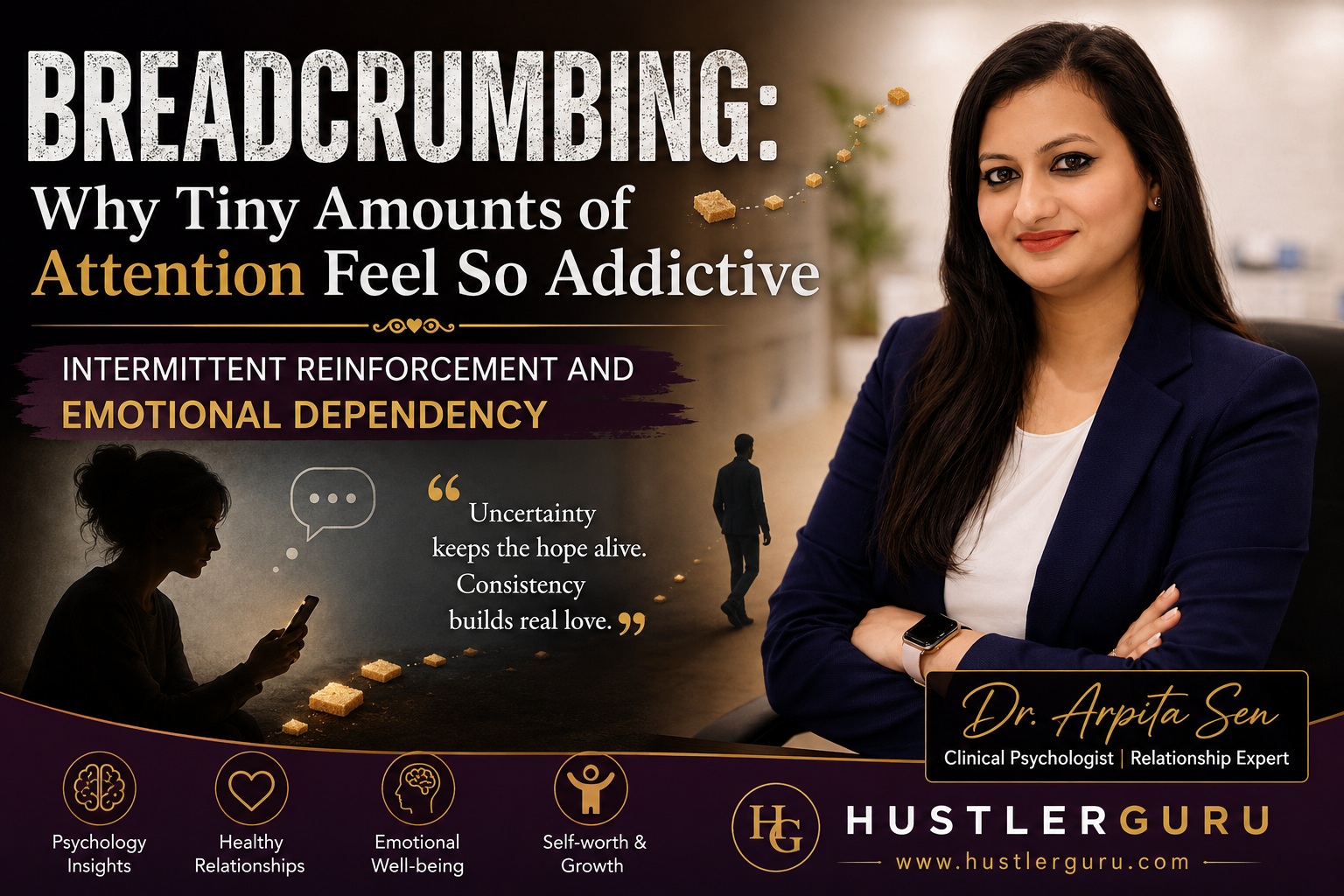
If there is one concept that has entered popular psychology over the last decade, it is trauma bonding. Unfortunately, it is also one of the most misunderstood. The term is frequently used to describe any relationship that involved emotional pain, prolonged conflict or difficulty leaving an unhealthy partner. While these situations may certainly involve trauma, trauma bonding is a far more specific psychological process. It does not simply refer to loving someone who hurts you. Rather, it describes the powerful emotional attachment that develops when cycles of abuse are repeatedly interrupted by moments of affection, remorse or emotional closeness.
This distinction is important because continuous abuse and intermittent abuse do not produce the same psychological outcomes. If a relationship consisted only of criticism, hostility and rejection from beginning to end, most individuals would eventually disengage. Human beings naturally move away from experiences that offer no emotional reward. Toxic relationships become extraordinarily difficult to leave not because they are entirely painful, but because they are unpredictably rewarding. Between the episodes of manipulation, emotional withdrawal or humiliation are periods of tenderness, apologies, promises of change and reminders of the person the partner appeared to be in the beginning. Those brief moments of warmth prevent the relationship from being experienced as wholly negative. Instead, they create hope, and hope is often the strongest glue in an unhealthy relationship.
Hope, unlike certainty, is remarkably resilient. It survives repeated disappointment because it continuously tells us that the next attempt might finally be different. Many people who have never experienced a toxic relationship struggle to understand why someone remains despite repeated betrayal. They often ask questions such as, “Why didn’t you leave after the first incident?” or “How could you still believe they loved you?” These questions are understandable, but they assume that the person inside the relationship experiences it in the same linear way as the observer standing outside it. They do not.
From within the relationship, every act of cruelty is mentally balanced against memories of affection. Every broken promise is weighed against the possibility that this time the apology might be genuine. Every episode of emotional abandonment is softened by the recollection of happier days. The relationship therefore exists as two conflicting realities simultaneously. One reality contains manipulation, emotional neglect and fear. The other contains tenderness, intimacy and hope. Trauma bonding thrives precisely because neither reality completely erases the other.
Psychology has long recognised the extraordinary power of intermittent reinforcement in shaping human behaviour. The principle was first demonstrated through behavioural experiments, where researchers observed that behaviours rewarded unpredictably became significantly more resistant to extinction than behaviours rewarded consistently. In simple terms, when rewards arrive at irregular intervals rather than every time, individuals continue investing effort for much longer because they never know when the next reward will appear.
Although these experiments were conducted in controlled settings, the underlying principle extends remarkably well to human relationships. Consider a simple everyday example. Imagine two cafés located next to each other. At the first café, every tenth coffee is free. Customers appreciate the offer because it is reliable and predictable. At the second café, there is no announced loyalty programme. Instead, the owner occasionally surprises customers with a complimentary coffee without any obvious pattern. Interestingly, many customers find themselves returning more frequently to the second café, partly because each visit carries the possibility of an unexpected reward. The uncertainty itself becomes engaging.
Human relationships can unknowingly operate according to a similar psychological principle. In emotionally healthy relationships, affection is generally consistent. Expressions of care are not treated as rewards that must be earned after periods of suffering. Respect remains relatively stable regardless of temporary disagreements. Consequently, while these relationships provide deep emotional security, they produce relatively little psychological uncertainty.
Toxic relationships operate differently. Kindness becomes inconsistent. Emotional availability fluctuates dramatically. Affection appears unexpectedly after prolonged emotional deprivation. Because the positive experiences occur unpredictably, they acquire disproportionate emotional value. The individual is no longer responding merely to the affection itself; they are responding to the uncertainty surrounding its arrival. Each moment of warmth feels precious precisely because it is scarce.
This process gradually changes the emotional mathematics of the relationship. Small acts of kindness begin compensating for disproportionately large acts of harm. A sincere apology after weeks of emotional neglect suddenly feels profoundly meaningful. A single affectionate weekend seems capable of erasing months of criticism. Outsiders often perceive these reactions as irrational, but from a psychological perspective they represent the predictable consequence of repeated intermittent reinforcement. The nervous system has learned to value relief more intensely than stability.
Perhaps this is why many survivors later struggle to explain what kept them emotionally invested. When describing the relationship, they frequently alternate between two entirely different narratives. One moment they recount incidents of manipulation, humiliation or emotional abandonment. The next moment they remember extraordinary acts of generosity, intense emotional intimacy or declarations of lifelong commitment. Both accounts are accurate because both experiences genuinely occurred. The difficulty lies not in distinguishing truth from fiction but in reconciling two conflicting truths that coexisted within the same relationship.
Another psychological process quietly strengthens trauma bonds: cognitive dissonance. This refers to the mental discomfort that arises when our beliefs and experiences contradict one another. Human beings possess a powerful desire for internal consistency. When reality conflicts with deeply held beliefs, the mind instinctively attempts to resolve the contradiction.
Imagine believing that someone loves you deeply while simultaneously witnessing repeated behaviour that communicates disrespect, manipulation or emotional cruelty. These two realities cannot comfortably coexist. Either the relationship is loving, or it is harmful. Because abandoning the belief in the relationship often carries enormous emotional, financial or social consequences, many individuals unconsciously choose the less painful alternative. Rather than concluding that the relationship is fundamentally unhealthy, they begin explaining away the harmful behaviour.
“He only behaves this way because he is stressed.”
“She had a difficult childhood.”
“They didn’t really mean it.”
“It only happens when we argue.”
“Things will improve once this difficult phase is over.”
Notice that each explanation reduces psychological discomfort without requiring a painful reassessment of the relationship itself. These explanations are not necessarily dishonest. In many cases, the individual genuinely believes them because they preserve emotional coherence. The mind naturally searches for interpretations that allow cherished beliefs to survive.
Manipulative partners often reinforce this process through gaslighting, a form of psychological manipulation that systematically causes individuals to question their own perceptions, memories and emotional reactions. Contrary to popular usage, gaslighting is not merely lying. It involves repeatedly presenting an alternative version of reality until the victim gradually loses confidence in their own judgment.
Imagine expressing hurt after a deeply disrespectful interaction, only to be told that you are “too sensitive,” “imagining things,” or “overreacting.” Initially, you may disagree. After hearing the same response dozens or even hundreds of times, however, self-doubt quietly begins replacing certainty. Instead of asking whether the behaviour was unacceptable, you begin asking whether your reaction was excessive.
This subtle shift has profound consequences. Once individuals lose confidence in their own emotional perceptions, they become increasingly dependent upon the other person’s interpretation of reality. The manipulative partner effectively becomes both the source of emotional injury and the authority responsible for defining whether that injury actually occurred. Few psychological dynamics create dependency more effectively.
Perhaps the greatest tragedy of trauma bonding is that it gradually changes the meaning of love itself. Instead of becoming associated with safety, mutual respect and emotional reliability, love becomes intertwined with uncertainty, longing, emotional exhaustion and the constant hope that things will eventually improve. The relationship begins to resemble an emotional marathon in which every moment of peace feels like a hard-earned reward rather than a basic expectation.
Over time, this altered definition of love extends beyond the toxic relationship itself. Even after leaving, the nervous system continues expecting intimacy to involve emotional volatility. Consequently, when a healthy partner arrives with consistency instead of confusion, reliability instead of unpredictability, and respectful communication instead of emotional games, the absence of struggle can feel strangely unfamiliar. The relationship is no longer activating the same emotional circuits that were repeatedly strengthened during the trauma bond.
Understanding this transition is crucial because it prepares us for the next question. If trauma bonding is sustained through cycles of emotional unpredictability, what exactly is happening inside the brain that makes unpredictability so psychologically compelling? Why does uncertainty generate such powerful emotional attachment, while consistency sometimes feels emotionally flat? The answer lies in the remarkable interaction between the brain’s reward system, stress hormones and the nervous system’s extraordinary capacity to adapt to repeated emotional experiences. Understanding that interaction reveals why recovery from toxic relationships often resembles far more than simply getting over an ex. In many ways, it resembles retraining the brain itself.
To understand why emotionally healthy relationships can initially feel less exciting than toxic ones, we need to move beyond relationship psychology and examine the remarkable adaptability of the human brain. For decades, neuroscientists have demonstrated that the brain is not a passive observer of experience. It is constantly learning from repeated patterns, strengthening frequently used neural pathways while gradually weakening those that remain inactive. Every repeated emotional experience, whether nurturing or harmful, leaves behind a subtle neurological imprint. Over time, these imprints begin shaping not only how we respond to relationships but also what we expect relationships to feel like.
One of the most widely misunderstood concepts in popular psychology is the role of dopamine. It is often described as the brain’s “pleasure chemical,” leading many people to assume that dopamine simply reflects how much enjoyment an experience provides. Contemporary neuroscience paints a far more nuanced picture. Dopamine is fundamentally involved in anticipation, motivation and reward prediction. Rather than being released only when something pleasurable occurs, dopamine is often released in expectation of a possible reward, particularly when that reward is uncertain.
This distinction may appear subtle, yet it explains a great deal about why toxic relationships become so psychologically compelling.
Imagine purchasing a lottery ticket. Most people understand intellectually that the chances of winning are extremely small, yet buying the ticket often feels strangely exciting. The excitement is not created by receiving the prize, since that almost never happens. It is generated by the possibility that this time the outcome might be different. The anticipation itself activates the brain’s reward circuitry.
The same principle explains why casinos continue attracting millions of visitors despite the mathematical certainty that the vast majority will lose money. Slot machines do not reward every attempt. If they did, people would quickly become accustomed to the predictable pattern, and the experience would lose much of its psychological appeal. Instead, the rewards appear unpredictably. Every unsuccessful attempt carries with it the possibility that the next one might finally succeed. Behavioural psychologists describe this as a variable ratio reinforcement schedule, one of the most powerful mechanisms for sustaining behaviour over long periods.
Although human relationships are infinitely more complex than gambling, they can unknowingly activate remarkably similar neurological processes. A partner who is consistently loving, emotionally available and respectful creates an environment of psychological safety. Because affection is expected rather than uncertain, the brain gradually relaxes. Emotional energy is redirected away from constant vigilance and towards connection, trust and long-term intimacy.
In contrast, a partner who alternates unpredictably between affection and rejection creates continual uncertainty. Every unanswered message, every unexpected apology, every affectionate reunion after emotional withdrawal becomes psychologically significant because the brain is continuously attempting to predict what will happen next. The uncertainty itself maintains attention. The individual is no longer responding solely to the partner’s behaviour but to the constant process of anticipating emotional outcomes.
However, dopamine tells only part of the story. Toxic relationships also repeatedly activate the body’s stress response. During periods of conflict, rejection or emotional unpredictability, the brain interprets these experiences as potential threats. The amygdala, a region responsible for detecting danger, increases its activity, triggering the release of stress hormones such as cortisol and adrenaline. Heart rate rises, sleep becomes disturbed, appetite fluctuates and attention narrows almost exclusively towards the relationship.
Ironically, when reconciliation eventually occurs, these stress hormones decline, producing an overwhelming sense of relief. Many people interpret this relief as evidence that the relationship itself is deeply meaningful. In reality, they are often experiencing the emotional contrast between prolonged anxiety and temporary safety. The greater the preceding distress, the more profound the subsequent relief appears.
This is one reason why survivors often describe the emotional highs of toxic relationships as almost unforgettable. They were not simply experiencing love. They were repeatedly cycling between physiological threat and physiological relief. The body remembered each transition.
Over months and years, these repeated cycles produce another important change. The nervous system begins adapting to chronic emotional unpredictability. This process, often referred to as nervous system conditioning, reflects the extraordinary flexibility of the human body. The nervous system continuously recalibrates itself according to the environment it encounters most frequently.
Consider healthcare professionals working in busy emergency departments. During their first few weeks, the constant alarms, medical emergencies and rapid decision-making can feel overwhelming. With experience, however, their nervous system adapts. Situations that once generated intense stress gradually become manageable because the brain has learned what to expect.
A similar adaptation occurs in emotionally volatile relationships. Initially, constant conflict may feel exhausting. Over time, however, emotional turbulence becomes incorporated into the nervous system’s baseline expectation of intimacy. The body unconsciously prepares for disappointment, conflict or emotional withdrawal before they even occur.
The consequences often become visible only after the relationship ends.
When individuals eventually enter emotionally healthy relationships, something surprising happens. The constant emotional stimulation disappears. There are fewer dramatic arguments, fewer desperate reconciliations, fewer periods of obsessive rumination and fewer emotional emergencies demanding immediate attention. Objectively, life has improved. Subjectively, however, the nervous system suddenly finds itself operating in an unfamiliar environment.
Many people interpret this unfamiliarity as boredom.
Yet boredom may not be the most accurate description.
What they are actually experiencing is the absence of chronic hypervigilance.
For perhaps the first time in years, the nervous system is no longer scanning continuously for emotional danger. There is no need to analyse every text message, interpret every facial expression or prepare for the next emotional withdrawal. The body has lost the constant stimulation to which it had gradually become accustomed.
This explains why healing frequently resembles withdrawal rather than celebration.
People often feel guilty admitting that they miss toxic partners. They worry that doing so invalidates the abuse they experienced or suggests they secretly wanted the relationship to continue. Neither conclusion is necessarily true. Missing someone and wanting to return to an unhealthy situation are entirely different psychological experiences.
A recovering smoker may miss the ritual of smoking while having no genuine desire to resume nicotine dependence. Similarly, individuals recovering from toxic relationships may miss the emotional intensity, familiarity or neurological stimulation without wishing to return to the relationship itself. The nervous system is mourning a familiar pattern, not necessarily a healthy one.
This distinction becomes especially important during the early stages of recovery because healing rarely follows a straight line. There are days when the mind clearly recognises the harm that occurred, and there are days when nostalgia selectively highlights only the positive memories. This inconsistency often confuses survivors, but it reflects the ordinary functioning of memory rather than evidence that leaving was a mistake. Human memory is inherently reconstructive. We rarely remember experiences exactly as they occurred. Instead, we recreate them each time we recall them, often influenced by our current emotional state.
Healing therefore requires considerably more than ending contact with a toxic partner. It requires teaching the nervous system that safety is not something to distrust. This process cannot be accomplished through willpower alone because conditioning develops through repeated experiences rather than isolated decisions. The brain learns through consistency, and therefore recovery also depends upon consistency.
This is why emotionally healthy relationships sometimes feel almost disappointingly ordinary during their early stages. There are no dramatic declarations of love after explosive arguments. There are no prolonged disappearances followed by emotionally charged reunions. There is no need to earn affection by enduring emotional suffering. Respect becomes routine. Communication becomes predictable. Reliability gradually replaces uncertainty.
Initially, these experiences may appear emotionally flat because they do not activate the same neurological pathways associated with intermittent reinforcement. Yet over time something profound begins changing.
The individual starts sleeping better.
Their concentration improves.
Their self-esteem no longer fluctuates according to another person’s mood.
Silence stops feeling threatening.
Disagreements become opportunities for understanding rather than evidence that the relationship is ending.
Trust gradually replaces vigilance.
The excitement has not disappeared. It has simply transformed. Instead of existing in emotional peaks and valleys, it begins existing as quiet confidence, mutual growth and psychological safety. These qualities may not generate the cinematic intensity celebrated in popular culture, but they create something considerably more valuable: sustainability.
Perhaps this is where our collective understanding of romance requires reconsideration.
Modern culture has become remarkably effective at romanticising emotional intensity while paying comparatively little attention to emotional regulation. Films often conclude at the moment two people finally unite after countless obstacles, leaving audiences to assume that the emotional turbulence itself represents love. Rarely do we witness the quieter years that follow, where intimacy is measured less by dramatic gestures and more by everyday reliability, emotional maturity and mutual respect.
The reality is that healthy relationships are not devoid of passion. They simply express passion differently. Passion no longer depends upon uncertainty. It grows through emotional safety. It flourishes because neither partner is forced to spend their emotional energy questioning whether the relationship will survive another day. Instead, that energy becomes available for shared dreams, intellectual companionship, humour, vulnerability and growth.
Ultimately, perhaps the greatest evidence of healing is not that we stop remembering toxic relationships. Memory does not disappear on command, nor should it. Healing becomes visible when those memories no longer define our expectations of love. It is the moment when consistency begins feeling reassuring rather than monotonous, when emotional stability becomes attractive rather than unfamiliar, and when respect no longer feels like an unexpected luxury but an ordinary foundation upon which intimacy naturally grows.
In many ways, recovering from a toxic relationship is less about finding someone new and more about developing a new relationship with one’s own nervous system. It involves patiently teaching the brain that love need not be confusing to be meaningful, that peace need not be mistaken for boredom, and that emotional safety is not the absence of passion but the condition that allows genuine intimacy to flourish.
Perhaps that is the most important lesson of all. We often spend years searching for the right person while overlooking a quieter truth. The healthiest relationship we will ever experience may initially feel unfamiliar not because it lacks love, but because it asks our nervous system to learn an entirely new definition of it. Once that learning begins, however, something extraordinary happens. What once felt boring gradually becomes comforting. What once felt ordinary becomes deeply precious. And the chaos that once masqueraded as passion slowly loses its power, replaced by a form of love that no longer demands survival in order to feel real.
That transformation is not merely the end of a toxic relationship.
It is the beginning of emotional freedom.

Dr. Arpita Sen holds a bachelor’s degree in Dental Surgery (BDS) from YMT Dental College and Hospital, Navi Mumbai. She also holds an MBA in Human Resources from Narsee Monjee Institute of Management Studies (NMIMS), Mumbai, where she graduated as a double gold medallist. She is the co-author of Not a Rat Race: Success Mantras of World Athletes (2023), and Winning as Husband and Wife: Decoding the Success Mantras of Marriage (2026), co-written with Abhirup. She currently leads Learning, Organization Development, DEI, Culture, Talent and HR Strategy at a multinational organization. She writes on growth, leadership, and the future of work in her blogs, mindofhr.com and hustlerguru.com, and has been featured across several speaking platforms, podcasts and panel discussions. In her free time, she enjoys travelling, reading novels, singing and performing classical dance. She can be reached on Instagram at @authorarpitasen and on LinkedIn
Read her books:
Not a Rat Race: Success Mantras of World Atheletes
Winning as Husband and Wife: Decoding the Success Mantras of Marriage