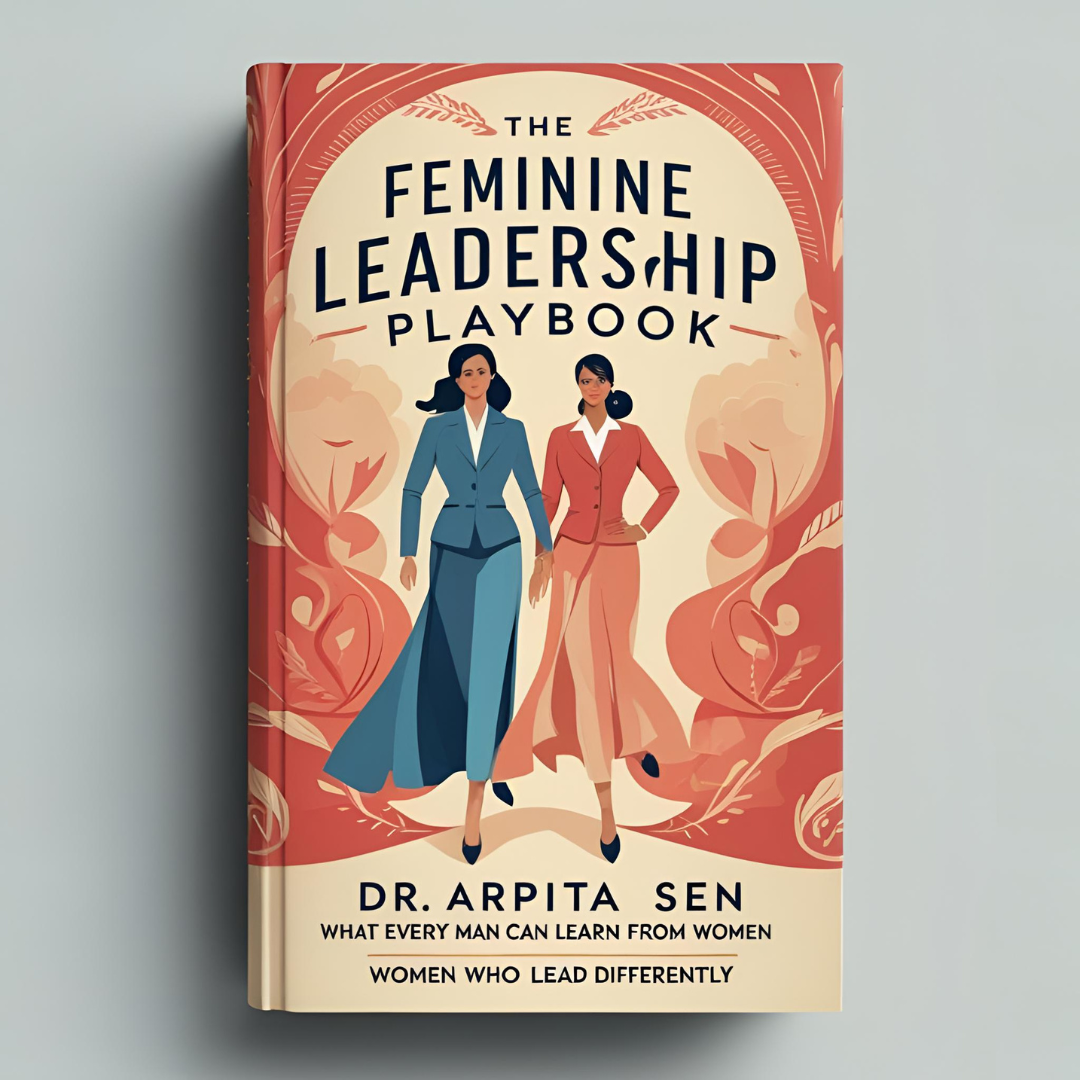
Feminine leadership isn’t about gender—it’s about a set of strengths the world desperately needs. Here’s the playbook, distilled into practical moves any man can start running today.
Introduction: Why “The Feminine Leadership Playbook” Matters
Scroll LinkedIn for five minutes and you’ll notice a theme: hustle harder, scale faster, crush competition. But a growing body of research by Harvard Business Review, McKinsey’s Women in the Workplace report, World Economic Forum, and IBM’s Diversity Accelerator study, keeps repeating the same headline: teams led with feminine leadership traits outperform the old command‑and‑control model on every metric that counts – engagement, innovation, and profit. In a world obsessed with hustle and hierarchy, it’s time to talk about something quietly revolutionary: feminine leadership traits. These aren’t just “soft skills”—they’re the modern power tools reshaping leadership in boardrooms, start-ups, and global movements.
Men who want staying power in the AI age need more than brute execution. They need what women leaders have sharpened for centuries: relational intelligence, strategic patience, empathy‑driven influence, and value‑aligned audacity. That, in a nutshell, is the feminine playbook.
Read more about how iconic feminine power archetypes shape leadership.
Superpower #1 – Radical Listening
“Most people do not listen with the intent to understand; they listen with the intent to reply.”
—Stephen Covey
What women do differently: A Yale study found female leaders spend 63 percent of meeting time in active listening vs. 34 percent for men. They pose clarifying questions before prescribing solutions, ensuring the right problem is solved.
Why men should steal it: Radical listening de‑escalates conflict, exposes blind spots, and surfaces hidden revenue—because the junior developer or quiet designer often holds the breakthrough idea.
Run the play:
-
Enter every meeting with one goal: learn, don’t impress.
-
Adopt the 3‑second rule—after someone finishes speaking, pause three seconds. It forces you to receive, not reload.
-
Recap: “What I’m hearing is ______. Did I get that right?”
Superpower #2 – Collaborative Confidence
What women do differently: Women often distribute credit and share decision‑making authority. Think Jacinda Ardern’s pandemic response panels or Satya Nadella’s culture rewiring at Microsoft (championed by a largely female leadership cohort).
Why men should steal it: The World Economic Forum links high collaboration with a 35 percent uptick in speed‑to‑innovation. Shared success creates psychological safety- Google’s #1 predictor of top‑performing teams.
Run the play:
-
Replace “I” language with “we” in slide decks.
-
Before finalizing a plan, ask each stakeholder, “What’s one risk I’m missing?”
-
Rotate meeting facilitation so every voice, not just the loudest, holds the mic.
Superpower #3 – Purpose‑Driven Courage
Many interpret feminine energy as gentle. Tell that to Rosa Parks, Greta Thunberg, or Rani Lakshmibai. Feminine courage is values‑based—less about ego, more about protecting principles and people.
Case Study: Salesforce’s Chief People Officer Cindy Robbins publicly advocated for an equal‑pay audit; CEO Marc Benioff listened, spent $3 million correcting disparities, and watched retention spike.
Why men should steal it: Purpose multiplies grit. Gallup data shows employees who connect daily work to a mission see 64 percent lower burnout.
Run the play:
-
Write a personal “Why I Lead” statement—one sentence.
-
Tie every project to that why when briefing your team.
-
When values clash with profits, practice the 24‑hour principle: sleep on the decision, evaluate long‑term trust equity, then choose.
Superpower #4 – Emotional Agility
Harvard professor Susan David defines emotional agility as “moving on from momentary emotions with curiosity and compassion.” Women score higher in identifying and labeling feelings—critical for preventing derailers like ego clashes or unspoken resentment.
Why men should steal it: Emotional agility cuts recovery time after setbacks and builds resilience. In volatile markets, that translates to faster pivots and fewer costly departures.
Run the play:
-
Adopt the “Name it to tame it” ritual. Before reacting, silently label the emotion: frustration, fear, pride.
-
Replace “Don’t be emotional” with “What is my data + my feeling telling me?”
-
Debrief failures with two columns: Facts and Feelings. Address both equally.
Superpower #5 – Quiet Dominance
Look at Oprah on stage or Beyoncé in an interview: calm, measured, un‑hurried. Feminine power doesn’t need to spike volume to fill space.
Why men should steal it: Neurological studies show lower vocal pitch and slower pace increase perceived authority. Add strategic silence and you own the room—no chest‑thumping required.
Run the play:
-
The 80/20 voice rule: speak 80 percent at low‑to‑mid pitch, 20 percent at elevated pitch for emphasis.
-
Use open posture—shoulders back, hands visible, chin parallel—but move minimally. Stillness = confidence.
-
Close deals with silence: after stating terms, stay quiet. Let the other party process—and often concede first.
The Rapid‑Adoption Toolkit
| Feminine Move | Tiny Habit to Build Tonight | Metric to Track |
|---|---|---|
| Radical Listening | End each day naming 1 insight you learned by not speaking | # of ideas implemented from others |
| Collaborative Confidence | Credit 1 teammate publicly every morning | Engagement score in pulse survey |
| Purpose‑Driven Courage | Share 1 values story on Slack weekly | Team alignment on OKRs |
| Emotional Agility | Two‑minute emotion label journal before shut‑eye | Personal stress rating (1–10) |
| Quiet Dominance | 30‑second pause after giving key directive | Meeting overwrite times (how often you re‑explain) |
Commit for 30 days, review metrics, iterate. Leadership is a design sprint, not a statue.
Beyond Gender: Building a Whole‑Brain Culture
Neuroscience shows everyone holds both estrogen‑fuelled and testosterone‑fuelled circuits, regardless of sex. Whole‑brain leadership—balancing analytical with intuitive, assertive with empathetic—wins the future of work.
For men: The feminine playbook isn’t a personality transplant. It’s adding skills to your arsenal.
For organizations: Create ecosystems where these traits aren’t “soft skills” but core competencies tied to bonuses and promotions.
Conclusion: Run the Plays, Win the Future
The world is shifting from industrial muscle to cognitive, creative, and relational capital. That arena rewards leaders who master agility, connection, and purpose—all signatures of the feminine playbook.
So the next time someone tells you to “man up,” flip the script. Woman up the way you lead. Radically listen, collaborate with confidence, stand for values, move with emotional agility, and dominate quietly.
Because in 2025 and beyond, the leaders who blend strength with softness won’t just survive upheaval—they’ll architect what comes after it.
These feminine leadership traits aren’t gendered—they’re future-proof.
Ready to run your first play? Pick one habit from the toolkit, start tonight, and watch your influence scale with soul.
Like this breakdown? Subscribe to HustlerGuru for weekly strategies on leadership, power archetypes, and building success with brains and heart.

Dr. Arpita Sen holds a bachelor’s degree in Dental Surgery (BDS) from YMT Dental College and Hospital, Navi Mumbai. She also holds an MBA in Human Resources from Narsee Monjee Institute of Management Studies (NMIMS), Mumbai, where she graduated as a double gold medallist. She is the co-author of Not a Rat Race: Success Mantras of World Athletes (2023), and Winning as Husband and Wife: Decoding the Success Mantras of Marriage (2026), co-written with Abhirup. She currently leads Learning, Organization Development, DEI, Culture, Talent and HR Strategy at a multinational organization. She writes on growth, leadership, and the future of work in her blogs, mindofhr.com and hustlerguru.com, and has been featured across several speaking platforms, podcasts and panel discussions. In her free time, she enjoys travelling, reading novels, singing and performing classical dance. She can be reached on Instagram at @authorarpitasen and on LinkedIn
Read her books:
Not a Rat Race: Success Mantras of World Atheletes
Winning as Husband and Wife: Decoding the Success Mantras of Marriage